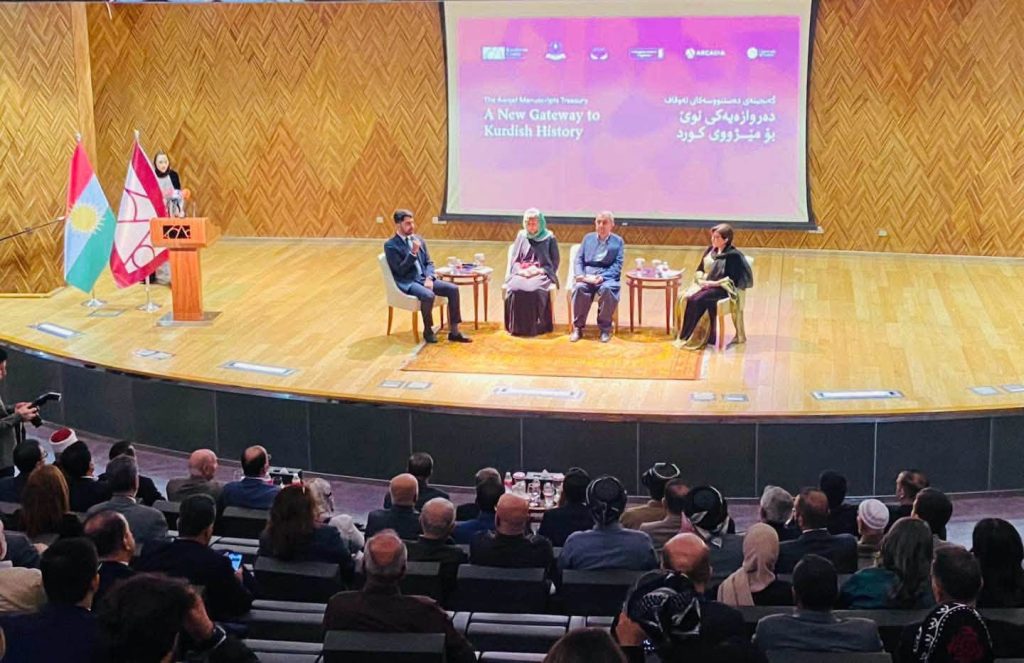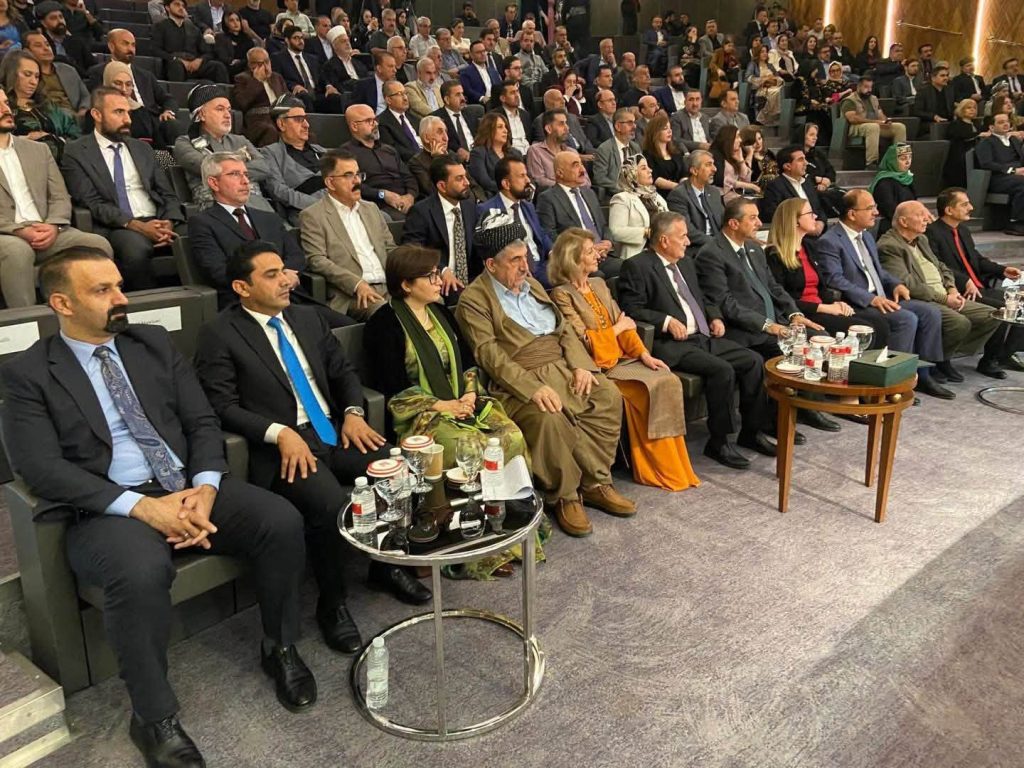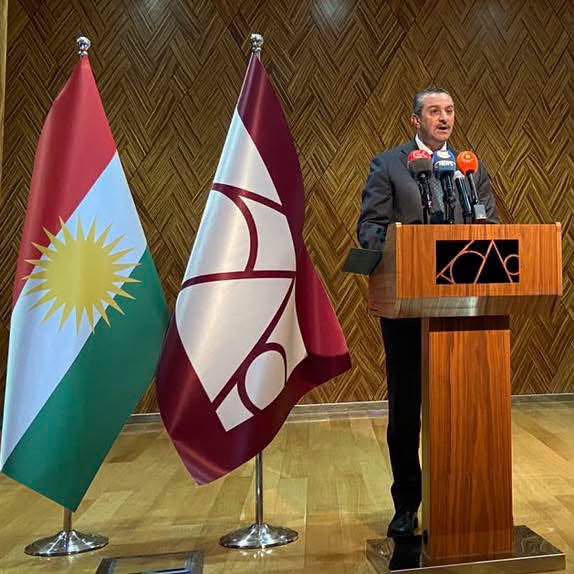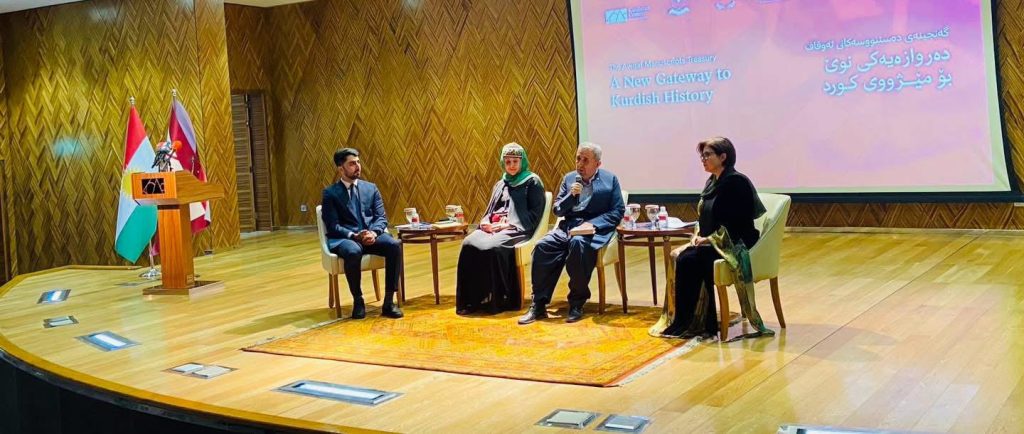
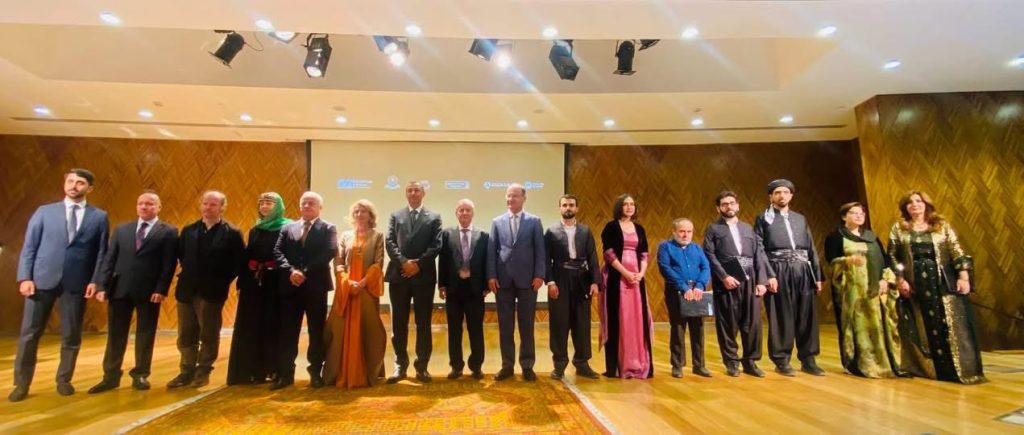
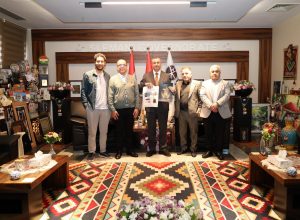
Yesterday, Dr. Haval Abubaker, Governor of Slemani, attended an appreciation ceremony for a significant manuscript preservation initiative in Slemani—marking another milestone of pride for the Slemani Governorate in the realms of culture, heritage, and accredited international initiatives. The event was organized by the Kurdistan Center for Arts and Culture (KCAC), with the attendance of the British Consul General in Erbil, Ms. Holly Vare, alongside governmental, political, cultural, and academic figures.
In an address delivered on behalf of the Slemani Governorate, the Governor conveyed his congratulations, appreciation, and support to Mr. Barav Barzani, President and Founder of the Kurdistan Center for Arts and Culture; Mr. Muhammad Fatih, Project Director at KCAC, and their team; the University of Exeter in the United Kingdom; the General Directorate of Awqaf and Religious Affairs of Slemani Governorate; the Directorate of Awqaf of Slemani; and the Directorate of the Slemani Awqaf Library. Working as a joint local and international team—established following a proposal submitted by the Governor of Slemani to the Kurdistan Center for Arts and Culture on July 3, 2025—they stepped forward with a profound sense of responsibility to undertake this project and digitize the manuscripts, prints, writings, and books housed in the SlemaniAwqaf Library, one of the richest repositories of manuscript and written archives in the region and the world.
Through the collaborative efforts of the Awqaf Library Directorate, the University of Exeter, the Arcadia Fund, and the British Library’s Endangered Archives Programme (EAP), the team has to date investigated and collected metadata for 4,070 sources, uploading 200 sources in both Kurdish and English to the British Library to provide open search and research opportunities worldwide. Through this achievement, Kurdish language and national resources have gained recognition and digital availability in one of the world’s premier libraries—an accomplishment regarded as an honor, an asset, and a distinguished mark of recognition for Kurdistan, and particularly for Slemani. He expressed his hope that the project’s success will fortify bridges, professional ties, expertise, and scholarly trust among the partners, serving as an active gateway for future collaborative projects in culture, economy, and the safeguarding of the region’s heritage, antiquities, and civilization as a cherished part of humanity’s past, present, and future.
In conclusion, he commended the contributions of all involved, notably Dr. Sabah Barzinji, Dr. Bushra Kasnazani, and their colleagues and team, who have worked diligently for over 13 months conducting thorough source investigations and cataloging 4,070 sources in Kurdish and English. Furthermore, staff members of the Awqaf Library, through technical assistance and training from the Kurdistan Center for Arts and Culture, have successfully digitized approximately 1,000 sources for the library.
He also extended his appreciation for the continuous efforts of Ms. Kawsar Qadir, Director of the Slemani Awqaf Library, and her team, as well as researcher and engineer Shamal Abubaker, Coordinator of the Slemani UNESCO Creative City of Literature Office, and his team.